INDIAN BUSINESS
In Conversation with ADDVERB: How Robotics & Automation Are Redefining Industrial Warehousing in India
In an exclusive Indian Business Times Podcast interaction, Bharanidharan S of Addverb explains how robotics, automation, and software are transforming India’s industrial warehouses and supply chains.

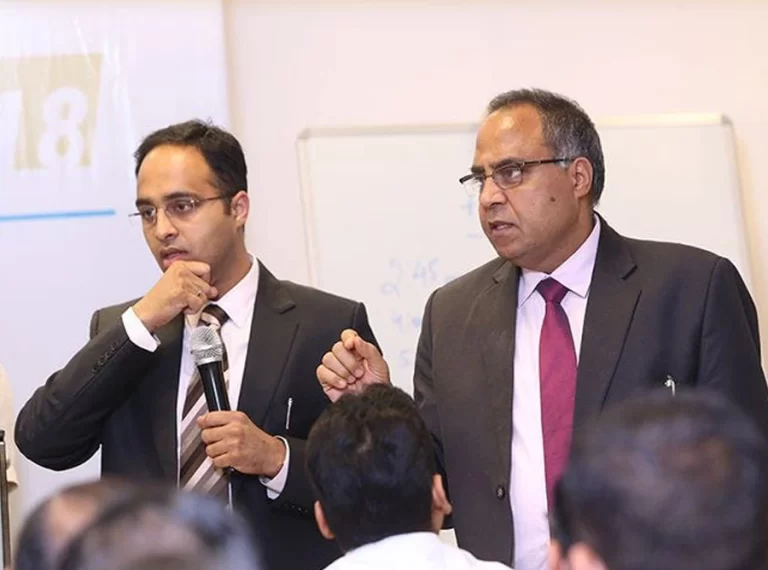
Exclusive - Indian Business Times Podcast with Bharanidharan S - GM, Software - ADDVERB
India has long been recognised as a global software powerhouse. But quietly, beyond screens and code, a much bigger transformation is taking shape, one that is unfolding inside factories, fulfilment centres, and industrial warehouses.
Robotics and automation are no longer experimental technologies limited to a few global giants. They are becoming foundational to how modern supply chains operate. From faster order fulfilment to improved accuracy and safer working environments, automated warehouses are redefining efficiency at scale.
At the centre of this transformation are companies like Addverb, a homegrown robotics and automation company that is building intelligent warehouse solutions using a powerful combination of hardware, software, and AI-driven orchestration.
In a recent episode of the Indian Business Times Podcast, Bharanidharan S, General Manager - Software at Addverb, shared insights into how automation is reshaping industrial warehousing and why software is the real brain behind modern robotics.
Warehouses Are No Longer Just Storage Spaces
Traditionally, warehouses were designed as static storage facilities, large spaces where human operators moved goods manually from one point to another. Today, that model is rapidly becoming outdated.
Modern warehouses are expected to deliver speed, accuracy, and scalability simultaneously. Whether it’s same-day deliveries, 10-minute commerce, or large-scale B2B distribution, supply chains are under constant pressure to perform better with fewer errors.
According to Bharanidharan, automation begins not with robots, but with understanding the customer’s problem. Each warehouse has different priorities, some struggle with space constraints, others with speed, and many with accuracy. Effective automation is about designing solutions tailored to these challenges, not deploying technology for the sake of it.
Hardware Moves the Goods, Software Moves the Intelligence
While robots are the most visible part of an automated warehouse, Bharanidharan emphasises that hardware alone is no longer the differentiator. The real advantage lies in how efficiently robots are orchestrated through software.
Addverb’s solutions combine autonomous mobile robots (AMRs), pallet shuttles, conveyors, and sorting systems with advanced software layers that function much like a human nervous system. Embedded controls handle real-time movement, perception layers allow robots to sense and navigate dynamic environments, and fleet management systems enable hundreds of robots to work together without collisions or delays.
This multi-layered software architecture allows warehouses to respond instantly to changing demand patterns, whether it’s preparing inventory in advance for peak sales or optimising retrieval routes in real time.
Robots and Humans: Coexistence, Not Competition
One of the most persistent myths surrounding automation is the fear of job loss. Bharanidharan addresses this head-on by reframing the conversation from replacement to displacement of tasks.
Robots are designed to take over the “3Ds” - dull, dirty, and dangerous tasks, allowing human workers to focus on higher-order responsibilities such as supervision, optimisation, and decision-making. In many cases, automation actually upskills the workforce, creating new roles in system monitoring, maintenance, and warehouse intelligence.
Rather than reducing human involvement, automation elevates it.
Why India Is Uniquely Positioned to Lead in Robotics
India’s rise in industrial automation is not happening despite its software dominance, it is happening because of it.
Robotics today is less about mechanical complexity and more about intelligent orchestration. India’s deep expertise in software, combined with initiatives like Make in India and production-linked incentives, has created a fertile ecosystem for building hardware at scale while maintaining cost efficiency.
Addverb’s expansion into global markets highlights this shift. Indian robotics companies are no longer just adopters; they are exporters of both hardware and intelligence, serving customers across multiple countries.
Beyond Warehouses: Humanoids, Quadrupeds, and the Future
While much of today’s automation focuses on storage, picking, sorting, and movement, the future promises even more advanced applications. Addverb is actively exploring humanoids and quadrupeds for environments where traditional robots may not suffice, such as unstructured terrains, inspections, or tasks that require human-like dexterity.
However, Bharanidharan is clear: humanoids are not the answer to every problem. The form of a robot should always be dictated by the task it is meant to solve. In many cases, non-humanoid robots are far more efficient and reliable.
India’s Warehousing Future Is Already Underway
As India’s supply chains grow in complexity and scale, automation will no longer be optional. From MSMEs to large enterprises, intelligent investments in robotics will become a strategic necessity.
The future of warehousing is not a distant vision. It is being built today, one automated aisle, one intelligent robot, and one software-driven decision at a time.