REAL ESTATE
A Private Mega-Project Takes Shape in North India as Mohit Bansal Pushes the Boundaries of Infrastructure-Led Growth
A large private infrastructure initiative led by Mohit Bansal is reshaping North India’s industrial landscape by integrating logistics, IT parks, entrepreneurship ecosystems, and long-term infrastructure-led economic growth.
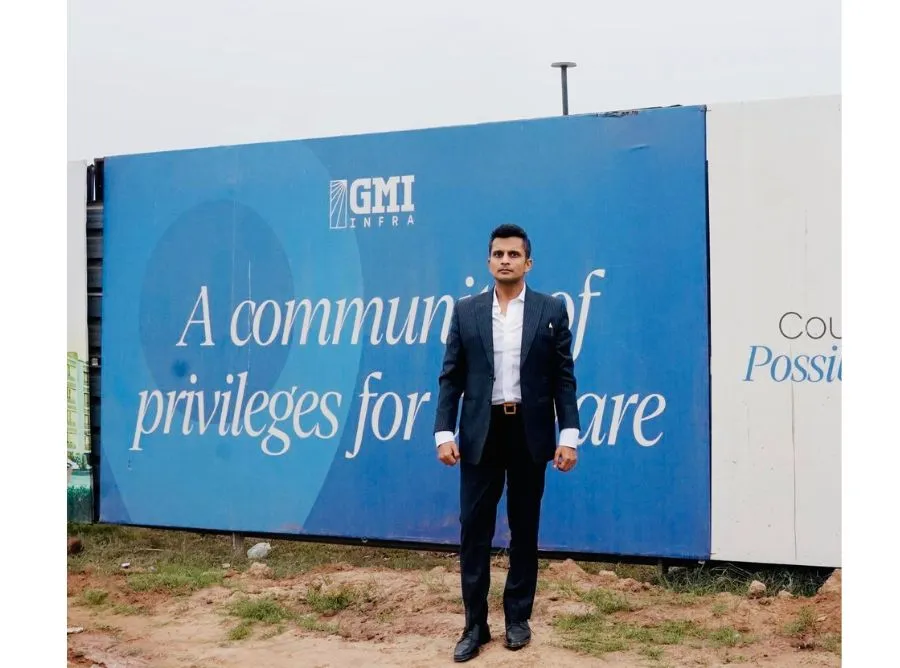
A Private Mega-Project Takes Shape in North India
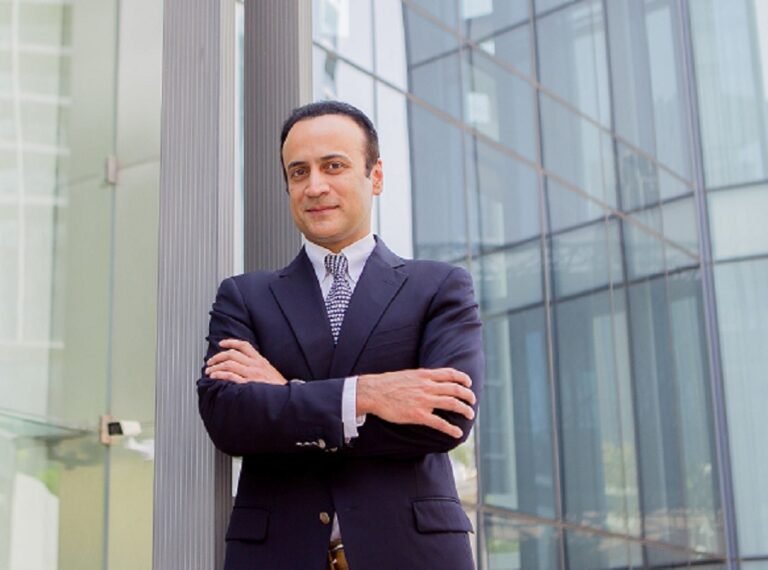
As nations compete to attract capital, manufacturing and talent in an increasingly fragmented global economy, infrastructure has become a strategic asset rather than a background utility. In India, one of the country’s most ambitious privately driven infrastructure initiatives is quietly unfolding across its northern industrial belt led by Mohit Bansal, CEO of GreyMarble Infra Pvt. Ltd. (GMI Infra).
What began in 2018 as a regional development company has evolved into a large-scale, integrated infrastructure platform that industry analysts now compare to corridor-based development models seen in parts of East Asia and the Middle East. GMI Infra’s portfolio spans IT campuses, integrated business districts, residential zones and emerging logistics and free-trade infrastructure, all designed to function as a single economic engine.
At the core of this effort is the development of GMI Logistics Park, a high-capacity logistics and trade hub intended to anchor North India’s participation in global supply chains. As international manufacturers diversify operations and governments seek resilient trade routes, logistics infrastructure has become a determinant of national competitiveness. GMI Infra’s project aims to reduce bottlenecks between production and export by directly integrating industrial, technological and distribution networks.
This approach reflects a broader shift in how private capital is being deployed in emerging markets. Rather than pursuing short-term returns through isolated developments, GMI Infra’s strategy prioritises long-horizon assets designed to remain viable across multiple industrial cycles. Workforce accessibility, digital infrastructure, sustainability and regulatory alignment are embedded into project planning, signalling an ambition to build infrastructure that evolves with economic demand.
Yet the initiative extends beyond physical development. Bansal has positioned entrepreneurship as a critical component of industrial resilience. Speaking at The Rise 2025 in Chandigarh, hosted by SMB Connect, he pointed to the growing influence of MSMEs, D2C brands and grassroots founders in shaping India’s economic future. While roads and logistics parks enable movement of goods, he argued, innovation depends equally on “invisible infrastructure”: mentorship, access to markets, supportive capital and environments where experimentation is encouraged.
From his vantage point as both a developer and an investor, Bansal observed that when founders are supported by robust ecosystems, they generate more than commercial success they strengthen international confidence in India’s capacity to build globally competitive enterprises. He also acknowledged SMB Connect’s role in recognising emerging founders and reiterated his commitment to supporting entrepreneurs who pursue scale with long-term discipline.
Educated in Computer Science and Applied Mathematics at the State University of New York, Bansal returned to India at a time when the country was beginning to reassess the geography of its growth. Establishing operations in Chandigarh and Mohali, he identified North India as a region with untapped potential combining urban planning legacies, talent availability and strategic connectivity to national and international markets.
Today, GMI Infra is advancing several developments that together form one of the most extensive private infrastructure footprints in the region. These include a 90-acre integrated business park, multiple IT campuses, free-trade and logistics zones, and residential communities designed to support workforce mobility. The company’s longer-term objective to develop 10 IT parks across North and East India by 2030 signals its emergence as a national infrastructure player rather than a regional developer.
As India positions itself within a shifting global economic order, the success of such mega-projects will help determine how effectively the country integrates with international supply chains and innovation networks. The infrastructure being built under Mohit Bansal’s leadership represents a distinct model one where private enterprise, entrepreneurial ecosystems and long-term economic planning converge.
If this model proves scalable, it could influence how India and other emerging economies approach infrastructure-led growth in the decades ahead.