FEATURED ARTICLES
Diksha Hindoar: Building a Global Legacy of Impact Through The Mahato Foundation
Diksha Hindoar Mahato is building a global social impact ecosystem through The Mahato Foundation, integrating education, rural livelihoods, climate resilience, and community leadership across Eastern India.
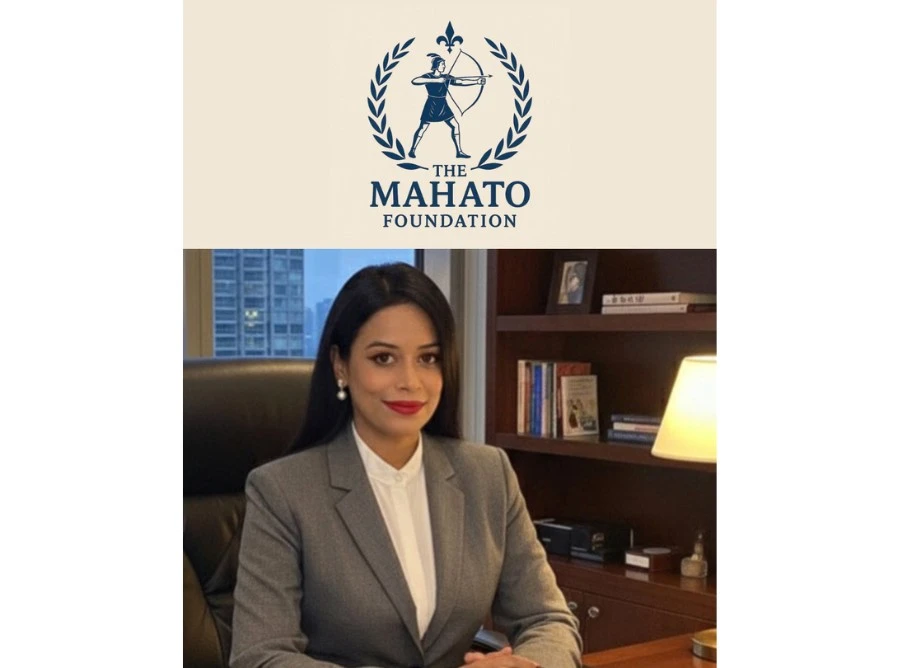
Diksha Hindoar: Building a Global Legacy of Impact Through The Mahato Foundation
Social impact is most powerful when it is built as an ecosystem, not an isolated effort. Diksha Hindoar Mahato embodies this belief through her holistic approach to change where education, rural livelihoods, environmental stewardship, and community leadership evolve together. Based in Tata, Jharkhand, Diksha represents a new generation of Indian social entrepreneurs translating legacy-driven values into scalable, future-ready development models through The Mahato Foundation.
Rooted in family ethos yet guided by modern systems thinking, her work reflects a deep commitment to inclusive growth, climate resilience, and people-centered progress across Eastern India and beyond.
The Mahato Foundation: Purpose with Structure
Established under the Balram Mahato Foundation, The Mahato Foundation operates as a registered non-profit headquartered near Nirmal Mahato Stadium, Kadma East, Singhbhum, Jharkhand. Its mission centers on democratizing access to education, livelihoods, and environmental security by building sustainable, community-owned systems rather than short-term aid mechanisms.
The foundation’s approach prioritizes need-based and merit-based education while integrating social welfare, agricultural resilience, and technology-driven solutions aligned with national and global sustainability goals.
Diksha’s Leadership: Legacy as Responsibility
As Co-Founder and CEO, Diksha brings together her academic grounding in clinical psychology with a strategic understanding of systems, human behavior, and technology-enabled problem solving. Influenced by her family forefathers’ values, she views legacy not as inheritance, but as accountability toward communities often excluded from mainstream development.
Her leadership balances grassroots realities with global frameworks, integrating AI insights, climate data, and institutional partnerships while remaining deeply community-first in execution.
Three Flagship Programs Driving Sustainable Impact
To strengthen community welfare, rural livelihoods, and climate resilience, The Mahato Foundation has structured its work around three integrated programs across Jharkhand, Bihar, West Bengal, and Odisha.
1. Community Empowerment & Inclusive Rural Welfare Program
Operating across regions such as Nawadih, Dumarkudar, Sonua, Jamtara, Bihta, Araria, Pingla, Bolpur, Boipariguda, and Bargarh, this program builds community-led governance platforms.
Key initiatives include women-led Self-Help Groups (SHGs), community leadership clinics, digital inclusion hubs for e-governance and agri-advisory access, and cultural cohesion events celebrating tribal heritage. These efforts aim to embed women, tribal populations, and marginalized groups into decision-making roles.
The program has empowered over 100,000 rural citizens with governance tools, enabled 1,800+ SHGs to actively participate in local planning, and improved awareness around healthcare, nutrition, and civic participation.
2. Sustainable Agriculture & Rural Livelihood Advancement (Krishi Shakti Abhiyan)
Focused on small and marginal farmers, Krishi Shakti Abhiyan strengthens livelihoods through organic and climate-smart farming practices. Farmer field schools provide training in composting, crop rotation, pest management, and regenerative agriculture, reducing chemical dependency.
The program supports seed banks of indigenous, climate-resilient varieties, facilitates farmer market linkages, and incubates women-led agri-enterprises in agro-processing and value-added products.
As a result, over 2,500 women-led agri-enterprises have emerged, with more than 40% of participating farmers transitioning to organic or natural farming practices linked to local and regional markets.
3. Water Resource Management & Conservation Initiative
Recognizing water security as central to climate resilience, the foundation implements community-managed water conservation models across micro-watersheds in Eastern India. Initiatives include rainwater harvesting structures, farm ponds, check dams, soil and moisture conservation training, and efficient irrigation systems.
Village-level water monitoring committees ensure equitable distribution and long-term maintenance. These efforts have significantly improved dry-season groundwater recharge, stabilized farm productivity, and reduced monsoon dependency.
Global Partnerships for Social Impact
The Mahato Foundation collaborates with globally respected institutions such as the University of Oxford’s Distinguished Speaker Seminar, Stanford University’s Entrepreneurial Thought Leaders Series, and McKinsey.org’s OHI for Nonprofits Initiative. These engagements provide exposure to global leadership perspectives, innovation frameworks, and evidence-based impact models. By aligning these insights with national missions like Skill India and Digital India, the foundation translates global best practices into localized, community-driven social impact initiatives.
Vision Ahead: Human-Centered Climate Innovation
Diksha envisions expanding the foundation’s work at the intersection of climate technology, education access, water security, and livelihood resilience. Her long-term goal is to build adaptive systems where innovation serves communities sustainably.
Life Lesson She Shares:
Lasting impact emerges when purpose, responsibility, and community move forward together.