STARTUP
Soumik Bandyopadhyay on Preparing the Next Generation for Stewardship, Not Just Ownership
Soumik Bandyopadhyay explains why next-generation family business leaders must be prepared for stewardship through mentorship, governance, risk awareness, responsibility and experience not simply ownership.
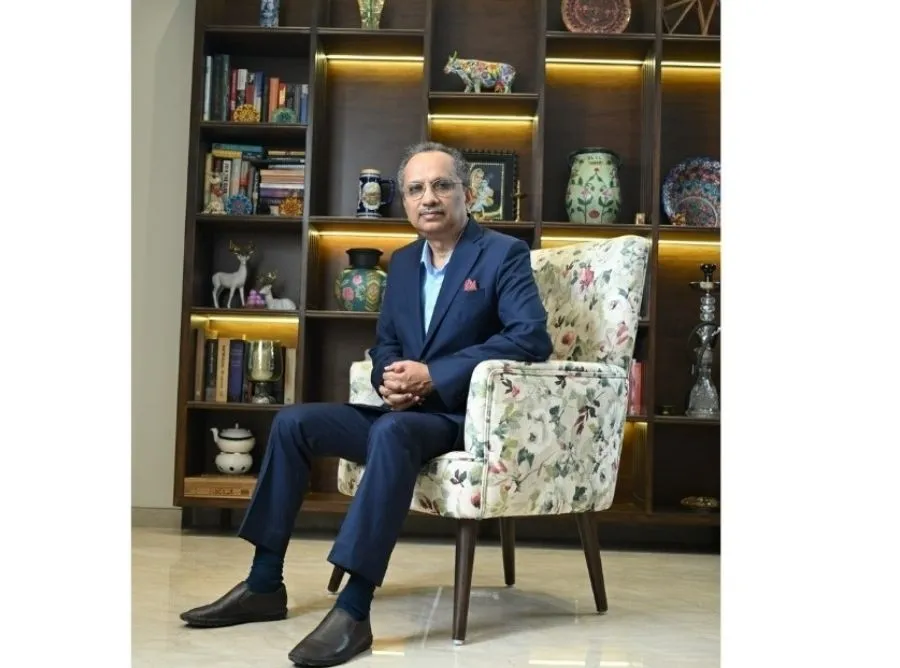
Soumik Bandyopadhyay - Founder & Managing Director, Soumik Bandyopadhyay Advisors Pvt Ltd (SBAPL)
For many family businesses, preparing the next generation has traditionally meant deciding when the current ownership will pass and identifying who will eventually take charge of the enterprise. But ownership and readiness are not the same thing. A family member may inherit shares, assets or voting rights at a predetermined stage of life. The ability to manage those responsibilities does not get transferred in quite the same way.
For Soumik Bandyopadhyay, this distinction is central to the way business families would want to approach generational transition. The next generation needs to understand not only what it will inherit, but also that they will be responsible for preserving, developing and eventually passing it forward.
This paradigm requires families to prepare successors for stewardship, not merely ownership.
Ownership Can Be Inherited, Judgement Cannot
A generational transition involves much more than transferring assets. The next generation may eventually have to make decisions concerning the operating business, family wealth, investments, employees and other stakeholders. Those decisions require judgement developed through experience and responsibility.
This is particularly relevant in today's business environment, where leaders frequently have to act with incomplete information. Markets, technology, regulations and geopolitical conditions can change much faster than they did for earlier generations. Knowledge acquired today may therefore need to be tempered with evolving circumstances.
Soumik's view is that preparing future leaders must consequently go beyond knowledge transfer. Young family members need opportunities to participate in real decisions, understand their consequences and develop the ability to respond and adapt when circumstances change.
The objective is not to create a younger version of the founder. It is to develop a capable steward for an ever changing business environment.
Start With an Understanding of the Family Legacy
Before discussing positions or authority, Soumik places considerable importance on articulating what the family actually stands for.
A business family's legacy is not simply the amount of wealth it has created. It includes the principles, values and experiences that shaped the enterprise. Understanding that history gives the next generation a context when circumstances become uncertain.
This does not mean successors must operate the business exactly as previous generations did. Markets change and leadership styles must evolve. But understanding why certain principles mattered to the family helps younger members distinguish between practices that can change and values that should endure.
A clearly articulated legacy can therefore become a common reference point across generations rather than a burden on the next generation.
Give the Next Generation Space, but Define the Risk
One concern Soumik has encountered in family businesses is the next generation feeling that it is not being given sufficient space. From the founder's perspective, however, reluctance to delegate may come from a very different concern: risk.
If a substantial part of the family's wealth remains concentrated in the operating business, a wrong decision can affect not only the company but also the family's financial security. What appears to the next generation as a question of control may therefore be a question of risk perception for the founder.
This is where communication becomes important.
Instead of framing the issue simply as whether the next generation should or should not receive greater authority, families can identify the risks involved, create appropriate boundaries and have an institutional approach to managing risk. Responsibility can then increase progressively as judgement and experience develop.
Giving space does not require abandoning oversight. It requires creating a framework within which responsibility can be exercised.
Allow Room for Mistakes
No founder builds a successful enterprise without making mistakes. Yet families can sometimes become unusually protective when the next generation begins making decisions.
Soumik's approach recognises that setbacks are an important part of leadership development. The objective cannot be to prevent every failure. It should be to ensure that mistakes occur within risk-managed boundaries and that the learning is captured.
A mistake that is properly examined can become valuable institutional knowledge and wisdom. A mistake that is ignored or repeatedly made becomes a governance problem.
Families should therefore be willing to discuss failures with the same intensity with which they examine successes. This creates an environment where younger leaders can develop judgement without believing that every unsuccessful decision will permanently reduce the confidence placed in them.
Mentorship Can Shorten the Experience Curve
Earlier generations of entrepreneurs often accumulated judgement over decades of running businesses. Today's next generation may not always have the luxury of such a long learning cycle.
This is where mentorship can play an important role.
Soumik distinguishes mentorship from traditional supervision. A supervisor is generally focused on the successful completion of a particular task or responsibility. A mentor takes a wider view of the individual's development and trajectory.
A good mentor does not simply provide answers. The mentor acts as a sounding board, challenges assumptions and brings experience into situations the younger leader may be encountering for the first time.
For family businesses, independent mentorship can be particularly useful because the mentor sits outside existing family hierarchies. The next generation may be able to discuss uncertainties and aspirations more openly with someone who is not perceived as representing one side of the family.
Stewardship Requires an Understanding of Risk
Entrepreneurs are naturally accustomed to taking risks. Indeed, the wealth being transferred to the next generation may exist precisely because the founder was willing to take risks that others were not.
But wealth creation and wealth preservation require different approaches to risk.
A next-generation family member needs to understand risk taking in the operating business which is fundamentally different from risks that should be taken with intergenerational family wealth. The two are different constructs and should not automatically be treated with the same perception.
This distinction becomes even more important when younger family members want to explore new businesses, technologies or investment opportunities.
The answer does not have to be to prevent experimentation. Families can instead establish risk capital, investment boundaries or other institutional structures that give the next generation room to pursue opportunities without placing the entire family wealth at risk.
That is stewardship in practice: allowing capital to remain productive while understanding what must be protected.
Governance Gives Responsibility a Structure
As responsibility moves from one generation to another, informal arrangements become increasingly difficult to sustain. Roles need to be understood, decision rights clarified and communication made more systematic.
Governance provides this structure.
For Soumik, institutionalisation is particularly important because the objective should be to create arrangements that are not dependent on the presence of any one individual, including the founder.
This also changes the meaning of succession. Rather than one individual simply replacing another, the family builds an institution capable of accommodating different leaders over time.
The next generation then inherits not merely assets, but a framework within which those assets and businesses can be governed responsibly.
From Beneficiary to Steward
The ultimate objective of next-generation preparation should be a change in mindset.
A beneficiary primarily asks what ownership provides. A steward must also ask what ownership requires.
That means understanding risk, respecting the responsibilities attached to capital, communicating with clarity with other family members, making difficult decisions and recognising that today's choices can affect generations that have not yet entered the business.
For Indian business families approaching generational transition, this distinction deserves greater attention. Legal ownership can be transferred through documents and structures. Stewardship has to be developed through exposure, mentorship, communication, governance and experience.
Soumik Bandyopadhyay's perspective places that preparation at the centre of succession. The question for a family is therefore not simply whether the next generation is ready to inherit.
It is whether the next generation has been given the opportunity to learn how to steward what it inherits.