EDTECH
Alphabetz Preschool Continues Telangana Growth with New Opening in Safilguda
Alphabetz Preschool expands in Telangana with a new Safilguda centre, reflecting rising demand for structured early childhood education, NEP-aligned learning, and accessible, community-based preschool options for modern families.
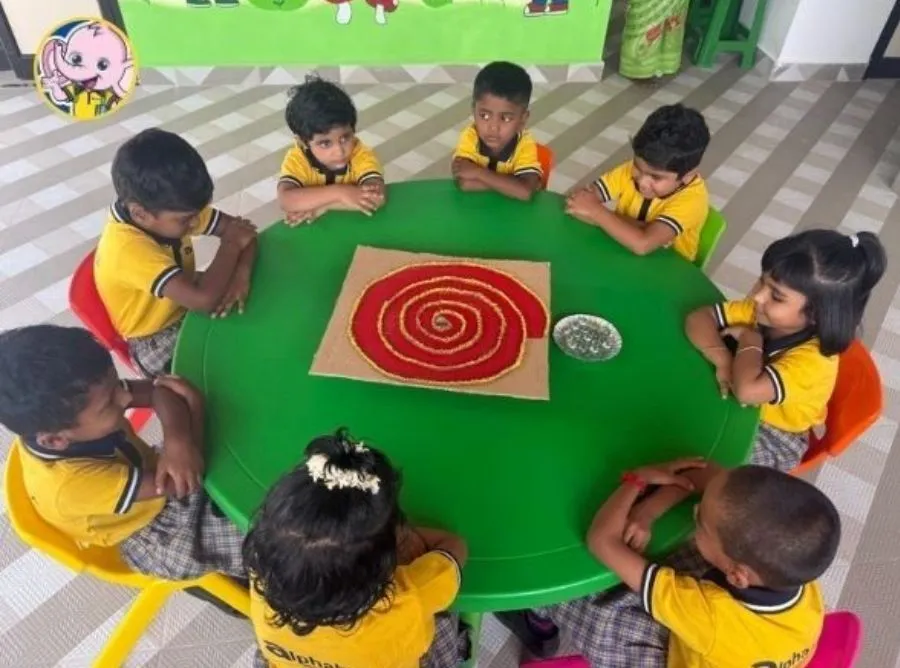
Alphabetz Preschool Continues Telangana Growth with New Opening in Safilguda
A newly opened preschool centre in Safilguda is drawing attention to the steady shift in how early childhood education is being approached across India. Designed for children between the ages of 2 and 6, the centre introduces a structured learning environment within a residential setting, combining safety-focused infrastructure, activity-based classrooms, and age-appropriate learning spaces. Its location within a growing neighbourhood highlights a broader effort to bring organized early education closer to families, reducing dependence on distant or informal childcare options.
The development also marks the continued regional expansion of Alphabetz preschool, which has been strengthening its presence across Telangana in response to evolving parental expectations. Safilguda, with its mix of working professionals and young families, represents a new demand cluster where accessibility, trust, and structured learning are becoming central to preschool selection.
Early childhood education refers to the foundational stage of learning before formal schooling, where cognitive development, communication skills, and social interaction begin to take shape. In India, this phase has gained renewed importance under the National Education Policy (NEP) 2020, which emphasizes Early Childhood Care and Education (ECCE) as a critical component of the schooling framework. The policy encourages play-based, activity-driven learning methods that prioritize understanding and development over early academic pressure.
This policy direction is increasingly reflected in parental decision-making. Families today are not only looking for safe environments but also for clarity on how learning is delivered and how children progress over time. In emerging urban localities like Safilguda, where nuclear families and dual-income households are more common, the need for dependable and structured preschool options has become more pronounced.
Understanding how preschools function on a daily basis is one of the most common concerns among parents. In organized settings, curriculum frameworks are typically designed around structured early learning methodologies that focus on language development, motor skills, and experiential activities such as storytelling, group play, and creative expression. Instead of formal examinations, child progress is tracked through continuous observation, classroom participation, and developmental milestones. Safety protocols ranging from controlled access to supervised environments form a core part of daily operations. Teacher preparedness is also a key factor, with educators undergoing regular training to align with evolving pedagogical practices. Many such institutions are gradually aligning their approach with NEP 2020 to ensure a smoother transition into formal schooling.
Alongside these educational aspects, practical considerations such as cost transparency and ease of communication continue to play a significant role in decision-making. While investment requirements in the preschool segment can vary depending on scale and location, Alphabetz preschool follows a structured and clearly defined entry model, with its franchise cost positioned at ₹2,99,999, supported by standardized setup and operational frameworks designed to simplify the onboarding process. Increasingly, institutions are adopting clearer structures to communicate such details, helping reduce uncertainty for parents and prospective partners alike. Communication practices have also evolved, with centres offering structured engagement through digital updates and direct support channels. Access to verified contact points such as official helpline numbers like 9044439044 associated with Alphabetz preschool ensures that enquiries related to admissions or partnerships can be addressed in a timely and transparent manner.
“Early education is not about accelerating academics
but about building a strong foundation for lifelong learning. A structured and
nurturing environment helps children adapt better to formal schooling.”
- Vikas Singh, Co-founder, Alphabetz Preschool
From a broader perspective, the expansion of organized preschool centres into neighbourhoods like Safilguda reflects a gradual decentralization of quality early education. Where such facilities were once concentrated in central urban zones, they are now becoming more accessible within community settings. According to A. Sai Baba, associated with the expansion initiative, this shift is helping bridge the gap between availability and accessibility, allowing more families to engage with structured early learning without logistical challenges.
Experiences shared by parents offer further insight into how these changes are being received. “We were looking for a place where our child could feel comfortable while also learning basic communication skills. The structured environment here has made that transition much smoother,” says Priya Reddy, a parent from the locality.
In a similar vein, Rahul Sharma, another parent, notes, “The balance between play and guided learning has helped our child become more confident and expressive over time.”
These experiences reflect a broader shift in early education priorities. Rather than focusing solely on academic readiness, preschools are increasingly emphasizing holistic development encouraging curiosity, social interaction, and emotional confidence. Activities such as music, storytelling, collaborative play, and sensory engagement are now seen as essential components of early learning, supporting well-rounded development during formative years.
As India continues to implement NEP 2020, the integration of preschool education into the larger academic framework is expected to deepen. The expansion of centres into residential areas signals a move toward making early learning more inclusive, consistent, and aligned with long-term educational goals.
In conclusion, the direction of early childhood education is shifting toward systems that combine strong learning outcomes with accessibility. With preschool now forming a vital foundation for future learning, institutions that effectively manage this balance are gaining relevance, a space where Alphabetz Preschool has established a consistent approach.