EDTECH
Pranav Gupta, Ashoka University Co-founder: Can India’s University Townships Finally Bridge the Academia-Industry Gap?
Pranav Gupta, Ashoka University and Plaksha University co-founder, examines whether India’s proposed university townships can meaningfully bridge academia, research and industry.
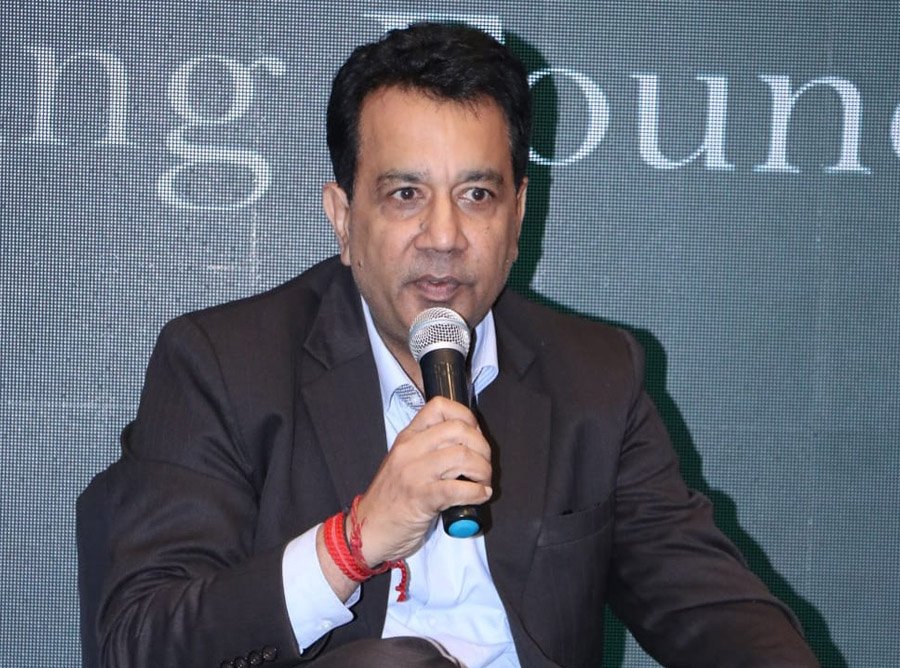
Pranav Gupta - Founder of Ashoka and Plaksha University
For decades, India has spoken about narrowing the gap between universities and industry. The 2026-27 Union Budget is now attempting something more structural: bringing the two physically closer together.
The government has proposed five university townships near major industrial and logistics corridors, envisioned as integrated academic zones containing universities, colleges, research institutions, skill centres and residential facilities. For Pranav Gupta, co-founder of Ashoka University and Plaksha University, the opportunity lies in thinking beyond the conventional campus. “A university works best when it is part of a larger ecosystem of ideas, research, entrepreneurship and real-world problem solving. Locating academic institutions close to industry can create opportunities, but proximity must ultimately translate into meaningful collaboration,” Gupta says.
The proposal has progressed beyond the Budget announcement. In July, the Department of Higher Education confirmed that consultations were underway with state governments, academia and industry. A nationwide Ministry of Education consultation seeking views on the design of the townships concluded in August.
The first stakeholder consultation, hosted by NIT Goa in May, offered an indication of how broadly the idea could be interpreted. NIT Goa is among nine NITs involved in preparing proposals, and participants discussed shared laboratories, faculty exchanges, industry-linked projects, internships and integration with skill institutions. One proposal envisaged Goa itself functioning as a “distributed university town” rather than creating an entirely isolated new campus.
States have also begun positioning themselves. Odisha is preparing a bid under the challenge route, with Bhubaneswar, Sambalpur and Koraput among locations reportedly being considered. The state is examining models linked to its industrial strengths, including mining and allied sectors.
The attraction is easy to understand. Universities frequently struggle to keep pace with changing technologies and workplace requirements, while businesses complain about shortages of job-ready talent. Gupta had highlighted this problem earlier, saying: “At Ashoka, we emphasize on industry-focused education. We are always improving our curriculum to keep up with the rapidly evolving business environment.” He also stressed multidisciplinary learning, skill development and a stronger research environment.
But the township idea could go considerably further than employability.
India's gross expenditure on research and development reached about ₹2.45 lakh crore in 2023-24, equivalent to 0.84% of GDP, according to the Department of Science and Technology. Private-sector R&D expenditure stood at about ₹1.27 lakh crore, slightly ahead of the government sector. NITI Aayog is separately developing a roadmap specifically to strengthen University-Industry-Government collaboration, including technology transfer and commercialisation of research.
That makes university townships potentially as much about research and innovation as classrooms and jobs.
“Industry should not only arrive on campus at placement time,” Gupta says. “Companies can work with faculty and students on research, offer real problems for students to solve, support laboratories and create pathways for ideas to move from universities into society and the marketplace.”
Plaksha University offers some context for that thinking. Conceived by entrepreneurs and industry leaders to rethink technology education, it was designed around interdisciplinary engineering, research and solving real-world problems — an approach intended to reduce the traditional distance between technical education and industry requirements.
There is, however, an important boundary to preserve.
A university located beside an industrial corridor cannot become merely a training centre for the companies surrounding it. Universities also exist to pursue basic research; question established ideas and explore fields whose economic value may emerge only years later.
“Industry participation should strengthen a university, not define its intellectual boundaries,” Gupta says. “Curriculum can benefit from industry insight, but academic institutions must retain the freedom to pursue fundamental research, interdisciplinary inquiry and ideas whose impact may not be immediately commercial.”
The government's consultations have referred to international ecosystems such as Singapore's one-north and Japan's Tsukuba Science City. But their lesson is not simply that laboratories, companies and universities should share a postcode. Successful innovation clusters depend on networks that allow people, knowledge, infrastructure and capital to move between institutions.
That may ultimately determine whether India's proposed university townships succeed.
Building campuses beside factories and logistics hubs is the easier part. Building a culture in which researchers, students, entrepreneurs and companies routinely work together is much harder.
As Gupta puts it, “A township should not be judged by how many institutions or buildings it contains. Its real success will be whether it creates an ecosystem in which universities, research, industry and entrepreneurship genuinely strengthen one another.”
If India can achieve that, the university township experiment could do more than bridge the academia-industry gap. It could change the way the country thinks about where and how its next generation of universities should be built.