FEATURED ARTICLES
Building Businesses for the AI Era: Sandeep Barve on Growth, Strategy and Business Re-architecture
In this interview, the Founder and Managing Director of InUnison Strategy Consultancy discusses why businesses must move beyond technology adoption to rethink their growth strategies, redesign operating models, and build sustainable competitive advantage in an AI-driven world.

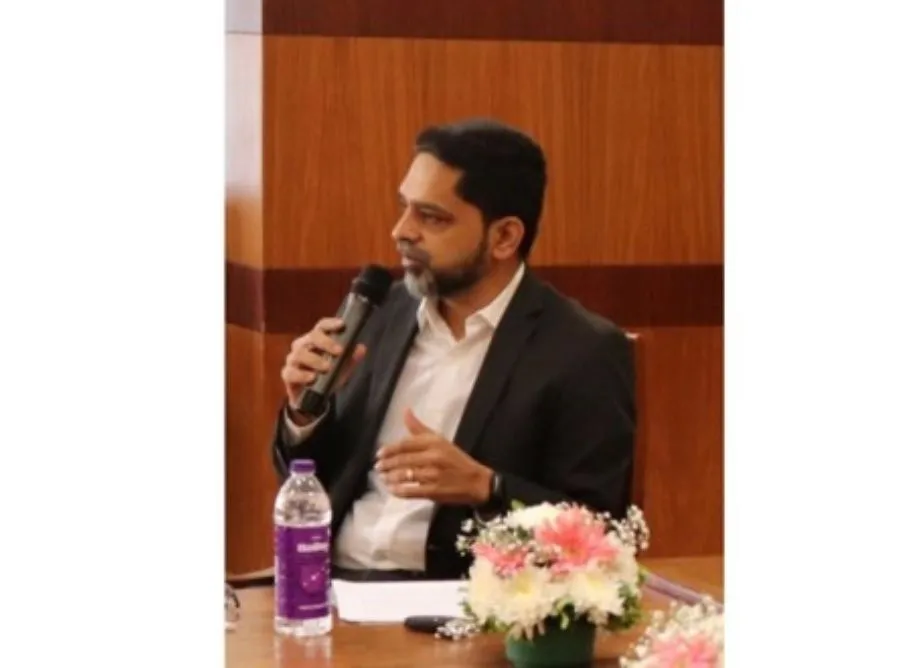
Sandeep Barve, Founder and Managing Director of InUnison Strategy Consultancy
1. You have spent three decades in global business leadership and transformation. What inspired you to build InUnison, and what problem did you want to solve?
I built InUnison Strategy Consultancy to help leaders turn ambition into a business capable of achieving it. In-Unison means “in sync” with the changing times; it also means “together”, collaborating with the clients.
Many founders have strong products and capable teams, yet growth remains constrained by founder dependence, disconnected priorities, or a business model they have outgrown.
We connect growth ambition with strategic choices, business design, leadership, and execution. My purpose is to develop tomorrow’s leaders and build futuristic, scalable, and sustainable businesses. The two must evolve together.
2. Businesses have been investing in digital transformation for years. Why do you believe the AI era requires a different approach?
Digital transformation largely improved how existing businesses worked. The AI era requires leaders to reconsider how their businesses should operate and earn.
When weeks of work become days, the implications extend to offerings, pricing, delivery, skills and customer expectations. Improving productivity alone leaves much of that opportunity untouched.
We begin with what customers will value, then redesign the business and its economics around delivering it. This means AI-led offerings must deliver concrete outcomes and address real business growth challenges.
AI solutions must help clients increase revenue and margins, acquire & retain clients, and create a sustainable competitive advantage, not just deliver productivity gains or cost savings.
3. Many companies are experimenting with AI. What do you think they are missing when they struggle to turn these investments into business value?
Most companies’ AI usage is fragmented, primarily focused around increasing individual productivity. They often have successful experiments but lack a clear path to connecting these experiments with business outcomes and initiatives that drive growth.
The AI Strategy and initiatives are often not linked to business strategy. AI Strategy must answer which lines of business and workflows should be prioritized for maximum impact. Which business processes need complete redesign, and which processes should be automated for a frictionless customer experience. AI deployment must evaluate where legacy applications can be reverse engineered with AI, where deterministic automation is enough and where businesses need to build AI agents with appropriate guardrails and human-in-the-loop governance.
Simply using AI for productivity gains does not answer the more important question: If AI saves two hours a day, what change does it make for the business? Do customers get faster service? Does capacity increase? Do revenue or margins improve? Who owns that result?
Value requires changes to workflows, roles, decisions, and measures. We connect initiatives to clear outcomes, full costs, and accountable owners while also identifying opportunities for new revenue and offerings.
The question is, “What will change in the business because AI now makes possible what was impossible earlier?”
4. InUnison talks about strengthening today’s business while creating tomorrow’s growth. Why is it important to pursue both agendas simultaneously?
Today’s business funds the journey. Tomorrow’s business creates the next source of growth.
Leaders must improve revenue, margins, and cash flow while developing offerings and capabilities for changing markets. Focusing only on current performance risks future relevance; investing only in the future can exhaust today’s resources.
We connect both agendas by releasing cash and capacity, strengthening viable offerings and sequencing investments in new opportunities.
Our approach is simple: optimize to grow, transform to scale, and reimagine to sustain.
5. You created UniShift™. What led you to develop this framework, and how does it help businesses approach growth differently?
I developed UniShift™ to connect decisions that businesses too often make separately. Growth depends on strategy, offerings, operations, leadership, technology, and execution working together.
It has three core focus elements:
Future Business Architecture - Defines what the business must become to stay relevant and competitive.
Unified Strategic Operating System - Aligns strategy, people, processes, technology, and execution to deliver measurable outcomes.
Exponential Growth Engine - Creates scalable growth through new markets, innovative offerings, and business models.
Together, they connect the future direction of the business with its ability to execute and grow.
6. When a founder approaches InUnison with a growth or transformation challenge, where do you begin?
I begin with two questions: What do you want the business to become, and what is preventing it from getting there?
“Sales are slow” is a symptom. The cause could be an outdated offering, weak differentiation, the wrong market, or delivery constraints.
We examine the evidence and bring the leadership team into a shared set of choices. Through Boardroom Navigator, we connect growth opportunities, AI-led future offerings, operating design, and financial implications to a strategic blueprint with clear ownership, measures and 90-day milestones.
7. Is business re-architecture relevant only to large enterprises, or can founders and mid-market businesses benefit from it too?
With AI disrupting industries, changing customer expectations and reshaping how work gets done, every business needs to reconsider its business architecture, regardless of size.
Leaders will have to rethink their businesses in an AI-driven world: what they offer, how they will win customers, how they will earn, how they will operate, and what will make them competitive and resilient and make it sustainable. -That is what re-architecting a business means
For founders and mid-market businesses, we focus on a few consequential choices and test the economics and sequence changes within their resources. Their proximity to customers and faster decision-making can become powerful advantages.
8. What has your experience at organizations such as Citigroup, HSBC, and Barclays taught you about building businesses that can navigate uncertainty?
From the outside, their scale appears to come from money. From the inside, three disciplines stand out:
Long-term strategy - Commit to building tomorrow’s business while delivering today’s results.
Early adoption of emerging technology - Act early to create a competitive advantage.
Aggressive innovation across markets and geographies - turn local customer needs into relevant, commercially viable offerings.
Three additional lessons have stayed with me:
Clarity amid complexity - Make priorities, decision rights and accountability explicit.
The whole customer journey - improve the overall outcome; a gain in one function can create friction elsewhere.
Leadership behaviour drives execution - what leaders fund, review, reward, and stop defines the real priorities.
Navigating uncertainty requires conviction about the destination and openness about the route.
I bring these disciplines, along with my strategic expertise and entrepreneurial experience, into my advisory and consulting engagements.
9. Consulting often produces strategies and recommendations. How does InUnison keep its work connected to actual business outcomes?
Our advisory and consulting engagements have always been outcome-driven, i.e., incremental revenue, higher margins, and a clear competitive advantage that makes the business stand out and remain ahead in the market.
We make economics and execution part of strategy development. We look at emerging high-growth markets and opportunities where a business has the right to win.
Every major initiative has a clear value case, investment requirements, accountable ownership, and measurable milestones. Our roadmaps include dependencies, priorities, and activities to stop, with execution support structured around outcome-based sprints.
We also distinguish completion from value realisation. Launching an offering is a milestone; customers buying it at the intended margin is a business outcome priority
That distinction keeps our work connected to revenue, profitability, cash flow, and lasting business capability.
10. Looking ahead, what does success mean to you for InUnison, and what would you like business leaders to take away from your work?
Success means helping build businesses that create lasting prosperity and leaders who can continue that work independently.
I want our contribution to be visible in stronger enterprises: businesses that grow profitably, create meaningful work, develop people, and remain relevant as the world changes.
India’s prosperity depends in part on how many ambitious founders can build enduring businesses. Helping them make that transition is deeply meaningful to me.
My message to leaders is simple: When everyone has access to AI, you won’t win and sustain unless you create strong differentiation and a competitive advantage. That’s the purpose behind our message: “Build With AI; Scale With Strategy.”
Ask what customers will value next, where you can earn hn advantage and which parts of your business must change to deliver it. Then commit people, capital, and accountability to those choices.