SUCCESS STORIES
How Vineet Gupta Went From Helping Students Study Abroad to Building World-Class Universities in India
Vineet Gupta’s journey traces a full circle in Indian education - from helping students access global universities through Jamboree to building Ashoka University and Plaksha University, institutions created to offer world-class learning opportunities within India.
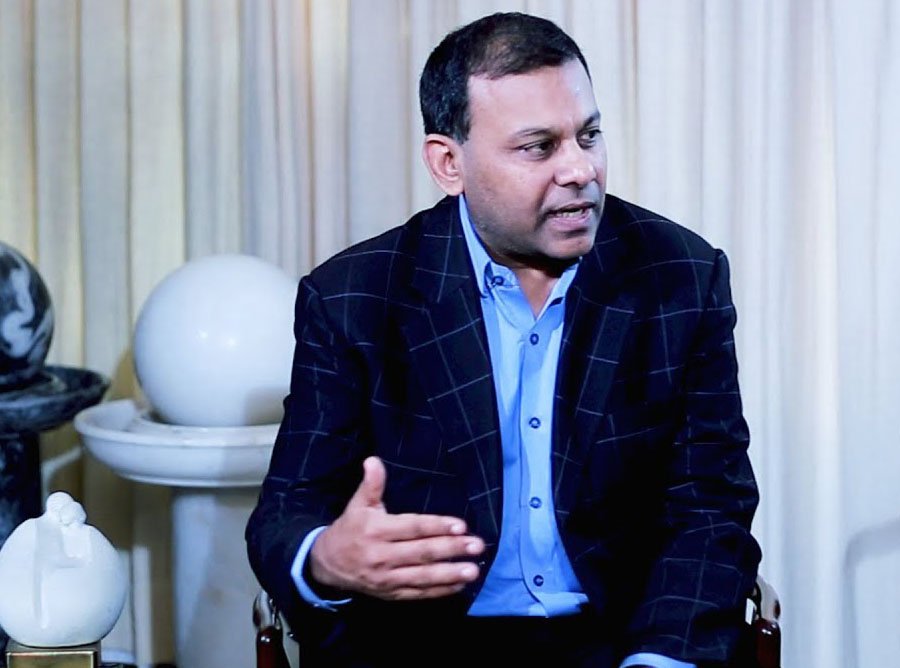
Vineet Gupta’s journey from Jamboree to Ashoka and Plaksha shows how he helped bring world-class education opportunities to India.
For years, Vineet Gupta helped Indian students prepare for admission to some of the world’s leading universities. Through Jamboree Education, he saw young Indians with strong academic records leave the country in search of better learning environments, broader exposure and institutions that encouraged ambition beyond marks.
Over time, that experience led him to a larger question: why should Indian students have to leave the country to access world-class higher education?
That question, in many ways, shaped Gupta’s journey from study-abroad education to institution building in India.
Gupta’s early life was rooted in a conventional middle-class Indian upbringing. He grew up in Chandigarh, where his father was a senior civil servant. The family had access to good schooling and facilities, but finances were often tight. He recalls cycling to St. John’s school where he studied, returning home to play, and growing up in an environment where education was seen as the most dependable route to building a strong future.
The expectation was not unusual for the time. A good student was expected to aim for a secure career. By the time he reached senior school, Gupta had begun doing well academically. After his father was transferred to Delhi, he joined DPS RK Puram, where he found himself among some of the brightest students in the country.
The school’s science section had a strong IIT preparation culture. Gupta entered that stream and eventually made it to IIT Delhi. But IIT, he says, was also a humbling experience. Students who had been among the best in their schools suddenly found themselves surrounded by peers who were equally, if not more, capable.
It was at IIT that Vineet Gupta’s interest began shifting beyond academics. He became involved in extracurricular activities, clubs and leadership roles, and gradually found himself drawn to entrepreneurship. After graduation, he had multiple conventional options. He had a job offer from a public sector company, an admission offer abroad, and even the possibility of attempting the civil services.
He chose none of them.
Instead, he decided to become an entrepreneur. His first venture was not in education but in manufacturing. Around 1992, he started a styrofoam packaging business with limited capital, including some support from his father and a partner. The business grew, but manufacturing in India came with its own challenges. By 2005, Gupta sold the venture.
By then, another important chapter had already begun at home.
His wife, Akrita Kalra, a gifted teacher, had started Jamboree Education from their garage. What began as a small test-prep initiative would eventually become one of India’s best-known overseas education preparation companies. After exiting the packaging business, Gupta became more actively involved in Jamboree and helped expand it from a few centres to a wider national presence.
It was during this phase that he began noticing a troubling pattern.
Many students coming to Jamboree were academically strong, often scoring 94 or 95 percent. Some were securing admission to globally reputed universities such as UC Berkeley, University of Wisconsin-Madison etc. Yet, the same students were struggling to find places in leading Indian institutions, where cut-offs could touch 98 or 99 percent.
One incident stayed with him. A bright student who had received admission to a top university abroad could not go because his family was uncomfortable sending their only son overseas for undergraduate studies. A few years later, the student returned to Jamboree for MBA preparation. Gupta felt he was no longer the same motivated learner he had once met.
The student had spent his undergraduate years in an evening college, attending classes with little engagement and losing much of the spark he once had.
“Somewhere, I felt maybe we are letting down our students,” Gupta recalled during a recent conversation.
That realization became the emotional and intellectual starting point for what would later become Ashoka University. Gupta began asking why India could not build institutions that offered the kind of academic experience Indian students were seeking abroad.
He started speaking to others who were thinking along similar lines. Over time, a group of founders came together with the ambition of building a high-quality university in India. Ashoka was conceived around 2007 and eventually opened in 2014.
The original idea was to build a broad multidisciplinary university, including engineering and other fields. But as conversations evolved, the founders saw a gap in Indian higher education. Private engineering colleges were already growing across the country, but there was limited serious investment in liberal arts, humanities, social sciences and sciences together.
Ashoka’s model emerged from that gap.
For Gupta, liberal education was never merely about importing a Western academic idea. He saw it as a return to a broader understanding of what it means to be well-educated and a good citizen.
A truly engaged citizen, he believes, must be able to read deeply, write clearly, debate, think critically, understand society, and engage with civil society. Such a citizen should also inculcate an underlying desire to make the world a better place. In the age of artificial intelligence, he argues, that foundation has become even more important.
“Technology has to solve for people and society,” Gupta says, explaining why humanities and social sciences remain essential even in a technology-driven world.
Ashoka went on to become one of India’s most closely watched private universities, known for its liberal arts and sciences model, faculty strength, student outcomes and emphasis on critical thinking. Gupta acknowledges that while Ashoka has done strongly on education outcomes, its research journey still has more ground to cover.
But Ashoka was not the end of his institution-building journey.
An engineer himself, Gupta and several others began thinking about the state of engineering education in India. Many of them had studied at IITs and felt that the conventional engineering model needed reimagination. The idea of Plaksha University began taking shape around 2015–16, and the university opened in 2021.
If Ashoka represented a new imagination for liberal education, Plaksha was built around a new imagination for technology education.
The goal was to move away from rigid, traditional engineering silos and create a more project-based, experiential and interdisciplinary model. Instead of conventional streams, Plaksha introduced areas such as Computer Science and Artificial Intelligence (in 2021 when AI had still not become a buzzword), Robotics and Autonomous Systems, Biosystems Engineering, and Data Science, Economics and Business. Plaksha’s research is focused on using technology to solve grand challenges in health, agriculture, energy, cyber security etc.
The common thread across Jamboree, Ashoka and Plaksha is not scale alone. It is Gupta’s belief that Indian students deserve access to institutions that can match global standards while remaining rooted in India’s needs.
Today, Gupta is often described as an institution builder. He accepts the description with humility but says it was never a title he consciously pursued.
“I don’t think I ever thought that I want to be called that,” he said. “The idea was just to create good institutions.”
For now, he remains focused on helping these institutions in whatever way he can. Ashoka has around 4,000 students and aspires to reach about 8,000, while Plaksha, still much younger, has about 800 students. Gupta says there are no current plans to take these institutions abroad or elsewhere in India; the priority is to deepen and strengthen them.
In that sense, his journey has come full circle.
He began by helping Indian students reach world-class universities abroad. He then spent the next phase of his life helping build institutions that could offer world-class education at home.
And perhaps that is the larger story of Vineet Gupta’s career: not just sending students to seek better opportunities abroad, but helping create opportunities for students in India itself.