FEATURED ARTICLES
Beyond Wealth Creation: Soumik Bandyopadhyay on Family Business Governance, Succession and Long-Term Continuity
Soumik Bandyopadhyay explains how family businesses can strengthen governance, reduce founder dependency, prepare successors and preserve wealth across generations through structured succession, risk management and institutionalised decision-making.
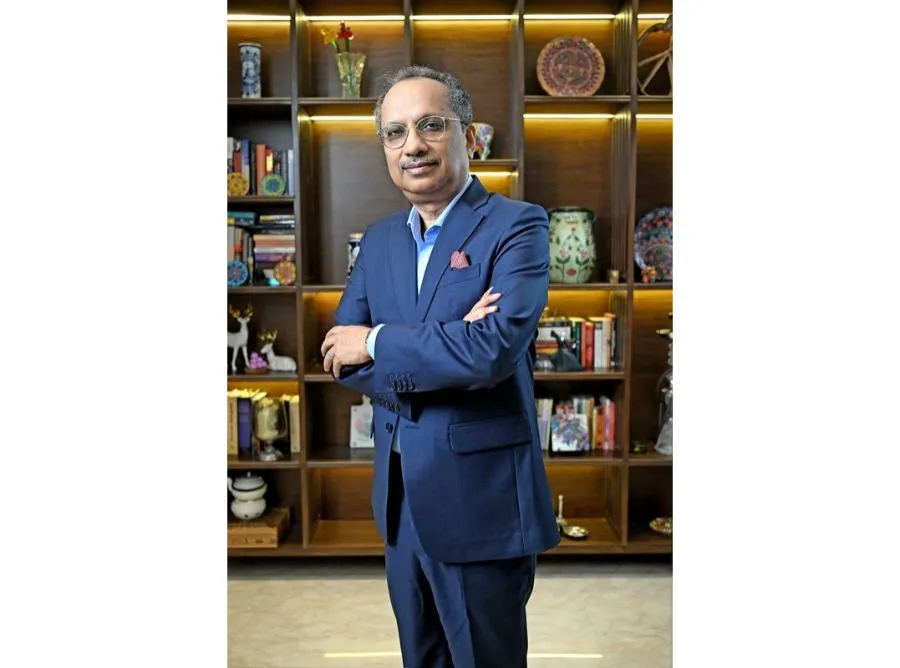
Soumik Bandyopadhyay
1. What inspired the establishment of Soumik Bandyopadhyay Advisors Pvt. Ltd., and how has your approach to advising promoter-led businesses and family enterprises evolved over the years?
I have spent most of my career working with family-owned and promoter-led businesses. My experience of running a global family office for about a decade brought me close to international best practices in the institutionalised approach to wealth preservation. The West has progressed considerably in this area, particularly in developing structures to preserve wealth across generations.
When I returned to India, I recognised a gap and an opportunity to work with entrepreneurs on institutionalising risk management practices, particularly for preserving intergenerational wealth. This led me to establish Soumik Bandyopadhyay Advisors Private Limited as a boutique advisory firm focused on these requirements.
From the beginning, I have been particular about maintaining a truly independent and non-conflicted advisory approach. The organisation is focused exclusively on advisory services. We do not sell financial products or other products and services to our clients. This independence is fundamental to how we operate because it allows us to provide advice without conflicting commercial interests.
2. Based on your experience working with businesses across sectors, what are the most common challenges family-owned and promoter-led businesses face in governance, succession and long-term planning today?
The challenges are unique to each family's circumstances, but one of the most common is helping successful entrepreneurs recognise that wealth creation and wealth sustenance are two different paradigms requiring different approaches to management.
Many entrepreneurs believe that because they have successfully created wealth through their businesses, its long-term preservation will naturally follow. However, the capabilities and risk-taking approaches that contribute to wealth creation do not automatically ensure that wealth will be sustained across generations.
Another challenge is the belief that family conflicts or disagreements will resolve themselves over time. In reality, issues involving complex family relationships, unspoken expectations and differences in individual aspirations rarely disappear without intervention. When these matters are not addressed at the appropriate time, they can become more complicated.
These challenges require conscious attention and structured intervention rather than an assumption that business success will eventually resolve them.
3. How has the approach to succession planning evolved, and what should business families do differently to prepare the next generation for leadership responsibilities?
Businesses have become considerably more complex, and succession planning must now focus on creating leadership bandwidth rather than simply nominating an individual to replace the founder.
Families need to invest time and effort in preparing the next generation to understand risk, exercise independent judgement and gradually assume accountability. This can involve mentorship programmes, participation in structured platforms like family and family business councils and exposure to boards and management committees, initially through observer roles before progressing towards greater responsibilities.
The fundamental premise is that succession is a process, not an event. It cannot and doesn't happen overnight, and following the process is as important as identifying the eventual successor.
It is equally important to recognise that members of the next generation may have different aspirations, capabilities and worldviews. Some may not be interested in participating in the operating business at all. The objective should therefore be to identify and develop the most suitable leadership talent through a structured process rather than assume that a particular family member of a certain genealogy must automatically take over.
4. What role does corporate governance play in helping family businesses scale, professionalise and sustain long-term growth?
Corporate governance is essentially an institutional framework that allows a business to grow without remaining excessively dependent on any individual's judgement.
When a business adopts corporate governance, it has already crossed an important hurdle by recognising the need for an institutional approach to decision-making and management. This creates a foundation for the organisation to develop beyond individual personalities.
There is also a connection between corporate governance and family governance. Families that recognise the importance of institutional structures within their businesses are often more receptive to applying similar principles to family matters.
This includes nurturing the next generation, creating and managing a continuous pipeline of leadership talent and establishing processes that support long-term continuity.
In the present business environment, corporate governance therefore serves two important purposes. It helps businesses scale and grow while also encouraging families to organise themselves in ways that support the continued development of their enterprises.
5. Many businesses depend heavily on their founders for decision-making. How can organisations reduce founder dependency while maintaining their vision and values?
This is an area where founders sometimes resist institutionalisation. The concern is often that introducing formal structures may slow decision-making or reduce the effectiveness of the entrepreneurial approach that helped build the business.
However, the objective is not to delay decisions. It is to ensure that the founder's strengths do not become vulnerabilities for the organisation.
There can be circumstances where a founder is suddenly unavailable because of a family tragedy, incapacity or another unforeseen event. If the business remains entirely dependent on that individual, its continuity can be affected and the strength can quickly turn into vulnerability.
The solution is to institutionalise the founder's values and entrepreneurial principles while gradually developing additional leadership capacity within the organisation. Responsibilities should move to capable individuals, identified and nurtured through a planned process.
The aim is to ensure that the founder's vision remains embedded in the organisation while its future no longer depends entirely on the continued presence of one individual.
6. How can family businesses establish a clear distinction between family relationships, ownership rights and professional management responsibilities?
The starting point is recognising the different roles that individuals can occupy within a business family. A person may be an owner, an executive involved in running the business or a family member who is a beneficiary without participating directly in management.
Each of these positions carries different expectations, rights and responsibilities. Families need to recognise these distinctions, articulate and establish agreed principles governing ownership rights, the benefit rights associated with ownership, compensation for those involved in management and the responsibilities that each role carries with itself.
For example, an individual managing the business has responsibilities towards family members who hold ownership interests but do not participate in day-to-day operations. Similarly, those involved in management should be appropriately compensated for their professional responsibilities. At the same time, the family members who do not participate in the businesses have a certain right to information which must be adequately respected and protected.
Structured communication forums can help families address expectations and disagreements arising from these different roles.
I believe the objective should be to ensure that the most suitable person runs the business, the most suitable person manages family affairs and the most suitable person plays the role of keeping the family together. These are three different responsibilities requiring different skills, maturity and values. Recognising these distinctions is essential before appropriate governance structures can be established.
7. What are some of the biggest challenges businesses face during leadership transitions, and how can they ensure continuity without disrupting operations?
There are two common challenges during leadership transitions.
The first arises when the outgoing leader formally steps back but continues to remain involved in decisions that should have moved to the successor. This creates confusion within the organisation because authority has supposedly been transferred, but the previous leader continues to exercise control.
The second challenge occurs when an unexpected event, such as the sudden loss or unavailability of the existing leader, forces an unprepared successor to assume responsibility immediately. The individual is effectively thrown into the deep end without adequate preparation.
Both situations can be detrimental to the business.
Leadership transition should therefore be treated as a continuous process rather than a sudden event where authority changes hands overnight. A planned transition requires defined milestones, clear delegation of responsibilities and consistent communication among stakeholders.
Continuity is particularly important because the organisation must remain operationally effective while leadership responsibilities are gradually transferred.
8. How can business families prepare the next generation to manage wealth, make independent decisions and take responsibility while protecting the family's long-term interests?
There must be a planned process that gradually brings the next generation closer to the business and its decision-making environment. Younger family members need to understand how the business operates, the risks involved and the responsibilities associated with managing both the enterprise and family wealth.
This preparation should involve structured exposure and opportunities to make independent decisions. I believe failures can be among the most effective teachers, provided they occur within a controlled environment.
The next generation should be allowed to take decisions where the potential exposure is limited. If a decision fails, the individual learns from the experience without placing the family's core interests at significant risk. If it succeeds, greater responsibilities can follow.
Families can support this development through mentorship, family councils, investment responsibilities, board observerships and participation in committees. Another approach is to introduce younger members at junior levels of the organisation and allow them to progress as they gain experience.
However, simply working within the family business does not necessarily mean that someone has developed all the capabilities required for leadership or wealth management. Structured interventions remain important in preparing individuals for broader responsibilities.
9. What emerging trends are likely to shape the future of family offices, wealth governance and succession planning in India?
The risks that entrepreneurial families need to manage are becoming increasingly diversified and complex. Alongside traditional business and governance risks, families now face cross-border exposures, reputational concerns, cybersecurity threats and changing expectations around succession.
Family members may study, work or settle abroad and may not necessarily want to return to the operating business. These developments create additional considerations around family expectations, participation and long-term continuity.
Another important challenge is the difference in how generations perceive risk. What appears to be an intergenerational disagreement may actually arise from different attitudes towards risk rather than a fundamental conflict of interests.
These differences need to be addressed through regular communication and structured forums where family members, including the next generation, have opportunities to express their views. The objective should be to encourage open discussion where individuals are willing either to convince others or be convinced by a different perspective.
Independent and non-conflicted professional advice also becomes increasingly important because many of these issues involve emotions and deeply established family relationships.
The broader direction is towards a more institutionalised approach to family governance, where complex matters are addressed through structured discussions and agreed processes rather than left to informal arrangements.
10. What is one key piece of advice you would offer promoters and business families looking to build resilient organisations that can thrive across generations?
The most important advice is to recognise that what helped an entrepreneur create wealth may not necessarily help sustain that wealth across generations. Wealth creation and wealth preservation are two different paradigms, and entrepreneurs need to understand this distinction before challenges become difficult to manage.
Entrepreneurs devote enormous time and effort to building successful businesses. However, once wealth has been created, there can be an assumption that its preservation will somehow take care of itself. That is rarely the case.
Families must consciously address governance, succession, reputation, risk management and communication. These issues require deliberate attention and should not be left unresolved in the hope that they will eventually settle themselves.
Recognising these requirements early allows families to establish the processes and structures needed to preserve wealth and support continuity across generations.