FEATURED ARTICLES
Making Solar Work for MSMEs: A Conversation With Damian Miller, CEO, Orb Energy
Orb Energy CEO Damian Miller explains how financing, integrated solar solutions and battery storage can help Indian MSMEs reduce energy costs, improve reliability and accelerate clean energy adoption.
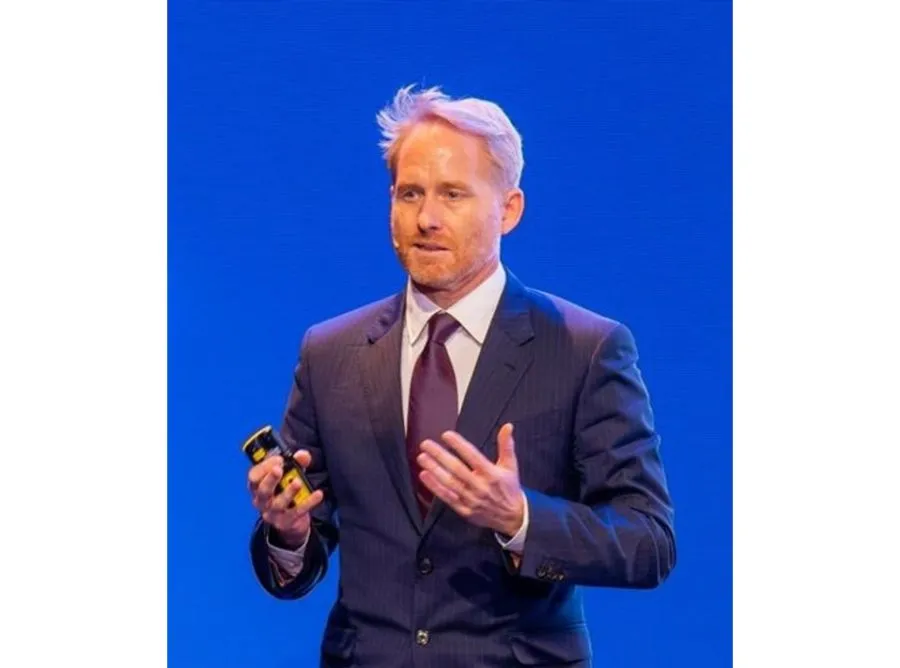
Damian Miller, Co-Founder & CEO, Orb Energy
1. What inspired the founding of Orb Energy in 2006, and how has the company's vision evolved over the years?
When we started Orb Energy in 2006, the cost of solar power was USD 4 per Watt-Peak. Now, it’s 10–15 cents per Wp globally. The efficiency of solar panels has also improved from 14% to 24% today. With these changes, the cost of solar per unit (kWh) has come down dramatically.
When solar was more expensive, our market was the off-grid market, as solar could not yet compete with grid electricity. But as solar costs came down and efficiencies improved, solar shifted to on-grid applications. This received a tremendous boost in 2012 from the country’s National Solar Mission, which also introduced feed-in tariffs for solar.
With these changes, our vision shifted from serving mostly residential customers with unreliable power in rural and semi-urban areas (where solar provided backup power) to serving businesses in all areas that saw clear savings from grid-connected rooftop solar. In particular, we set out to target SMEs among potential commercial and industrial (C&I) customers, as we saw them as underserved.
Our aim since then has been to make the adoption of rooftop solar by SMEs as streamlined as possible through a vertically integrated approach, from manufacturing our own solar panels to undertaking all system design, installation and service, and, critically, having our own in-house finance offering to overcome the upfront cost.
2. India's solar sector has grown significantly over the past decade. How do you see the commercial and industrial (C&I) solar market evolving, and what will drive its next phase of growth?
Today, we are at another inflection point in the story of solar’s rise in India. Battery costs have come down to the point where they are becoming relevant to C&I customers as a source of backup power to reduce diesel fuel consumption, and/or as a way to store solar power for self-consumption in the evening, when grid costs are higher.
Policies are now emerging, with states such as Maharashtra and Tamil Nadu leading the way, that seek to promote the use of battery energy storage (BESS) to new levels. This trend will only accelerate, with more and more states expected to introduce BESS-friendly policies so as to encourage customers to limit the injection of solar power during the daytime, when there is an overabundance, and to self-consume and/or feed in during the evening, when power demand is at its peak.
3. What role can solar play in improving MSMEs' energy competitiveness, and what needs to happen to accelerate its adoption across this segment?
MSMEs have a pivotal role to play in India's energy transition. Roughly 40% of India’s total industrial output comes from MSMEs. For many of these businesses, electricity is a major operating expense, and solar offers an opportunity to reduce energy costs and improve long-term competitiveness.
However, adoption needs to become easier and more practical. Businesses need greater awareness of the economic benefits of solar, access to suitable solutions and confidence that solar can meet their operational requirements.
Also, related to the above, financing for rooftop solar (and now BESS) needs to become much more streamlined and user-friendly. Today, MSMEs typically wait 2–6 months to secure rooftop solar financing from a bank and are required to provide a substantial down payment and collateral. At Orb Energy, we innovated nearly 10 years ago with our own in-house finance facility that enables an SME to buy its own rooftop system from Orb with zero down payment, zero collateral, and with the entire process taking just 7–15 days.
4. Despite growing awareness of solar, many MSMEs are still hesitant to adopt it. What are the biggest challenges holding them back, and how is Orb Energy addressing them?
I see three key barriers.
First, the upfront investment. MSMEs often have competing demands on their limited resources. At Orb Energy, we address this through our own in-house, collateral-free financing, with repayment periods of up to five years and, as mentioned, zero-down-payment options for eligible customers (subject to credit assessment).
Second, concerns around quality and accountability. Solar installations involve multiple components and stages, and customers can end up dealing with different vendors when something goes wrong. We address this through a uniquely vertically integrated model covering manufacturing, system design, installation, finance and after-sales support. Customers have one point of contact, with end-to-end responsibility.
Third, policy confusion. Today, we are in the transition from Chinese-made solar cells to Indian-made solar cells. This is a laudable initiative and is critical to India’s future energy security. As manufacturers of solar panels in India for more than 10 years, we know this. But the implementation has been challenging and confusing for both vendors and buyers. This, combined with a patchwork of different policies at the state level, can create a high degree of policy confusion for MSMEs, which we, as a company, aim to resolve.
5. What should businesses consider when evaluating the savings, payback period and long-term returns of a solar project?
The number one thing that a business should consider when thinking about the payback and long-term savings from solar is quality and reliability.
Very often, we see customers cutting corners in the interests of reducing upfront costs, without considering how this will affect their progress towards achieving payback in 3 - 4 years and their longer-term returns on their investment. Solar is a product warranted for 25 years, but equally critical is the quality of system installation and service.
At Orb Energy, we have now served approximately 2,000 MSME customers with rooftop solar, giving us a huge number of data points demonstrating that we deliver high-quality, reliable systems. We urge all prospective customers to look past cost-cutting shortcuts and focus on what really matters when it comes to achieving payback and securing their expected returns.
6. Orb Energy brings solar panel manufacturing, financing, installation and after-sales support under one roof. How does this integrated approach benefit customers?
There are three key pillars to our vertically integrated strategy. I believe the benefits of these three pillars to customers are self-evident.
First, we make our own solar panels. This means we have greater confidence about the quality of the product that we are supplying to our customers. Our record on product quality and warranty claims is excellent.
Second, we design, install and service our systems and adhere to very stringent and strong quality and safety measures in doing so. Customers are always hugely impressed with the quality of our installations, and even more so with our uniquely strong after-sales service. We provide customers with three free after-sales service visits in the first year to support customer education and overall satisfaction. After that, customers can buy AMCs as well as cleaning services executed by us.
Third, as mentioned, we are unique in providing in-house finance with zero down payment, zero collateral and very fast turnaround times. Also, we do not charge for early repayment to help MSMEs who want to prepay and own their own system prior to the five-year tenure of the finance.
This vertically integrated approach gives customers a single point of contact and greater confidence in the quality, execution and long-term performance of their systems. It also allows us to maintain better control over the customer experience.
7. When should a business consider ground-mounted solar instead of rooftop installations?
Rooftop solar is a practical option for many businesses, but it is not always possible to generate enough power from the available roof space. Some facilities have limited rooftop area in relation to their large power demands.
In such cases, ground-mounted solar can be a valuable alternative. Businesses can access solar capacity through a dedicated plot in a solar park without having to use their own rooftop space. This can also be particularly relevant for power-hungry businesses looking to meet a larger share of their electricity requirements through solar.
I see ground-mounted solar and rooftop installations as complementary solutions. The right choice depends on a business's energy consumption, available rooftop space and long-term energy and financial objectives.
8. As solar adoption grows, how do you see businesses evolving from simply generating solar power to managing their overall energy consumption more efficiently? What emerging trends and technologies do you believe will shape this shift?
Businesses are increasingly looking beyond simply generating electricity from solar. The focus is shifting towards managing when and how energy is consumed, and how overall energy costs can be optimised.
Here, as mentioned earlier, BESS will play a critical role. Batteries can help businesses store solar energy for use later, manage peak electricity costs and reduce dependence on diesel generators during outages. We are also seeing growing interest in energy solutions that combine solar, storage and grid power based on a facility's operating requirements.
I believe the future of industrial energy management will be about integrating these technologies to improve cost efficiency, energy reliability and operational resilience.
9. What are Orb Energy's priorities for its next phase of growth, and how do they align with the evolving energy needs of Indian businesses?
First, we are now rolling out our second solar park (50 MW) in Karnataka (in Kalaburagi district), which explicitly targets larger SMEs with big electricity needs. Our first solar park in Karnataka (30 MW) sold out rapidly to 12 SMEs, and we expect the same from our second solar park. After this, we aim to replicate our solar park model more quickly, not just in Karnataka but also in other Indian states.
Second, we want to scale our in-house finance facility further to reach more MSMEs who need access to zero-collateral, zero-down-payment, fast finance for rooftop solar + BESS. This is one of our strongest strategic assets, and we intend to develop it, scale it and expand its reach to more and more MSMEs.
Third, we want to continue to strengthen our solar panel offering, as well as introduce our own battery offering. We have some big plans for upgrading our manufacturing in these areas, and look forward to raising the funds to do so.